 08:45–09:10Reachy mini: Giving a body to AI


 Marco Kuendig, Davide Walder
 Manisha De · Swisscom

 Stefano Maestri, Alessio Soldano
 Ricardo Silveira Cabral, Matt Staats
 Baptiste Macé · Arolla
 Krzysztof Cieślak · GitHub Next
 Susanna Wong · Typeform
 Max Gfeller · Lovable
 Oleksandra Bovkun · Databricks
 David Pech · Wrike
 Michael Rishi Forrester · Accenture
 Sohan Maheshwar · AuthZed
 Alessandra Pasini · AWS
 Pini Reznik · re:cinq
 Natalie Pistunovich · JFrog

 Huriel Reichel, Oliver Hofmann

 Sven Scheffel, Gabriel Dinant
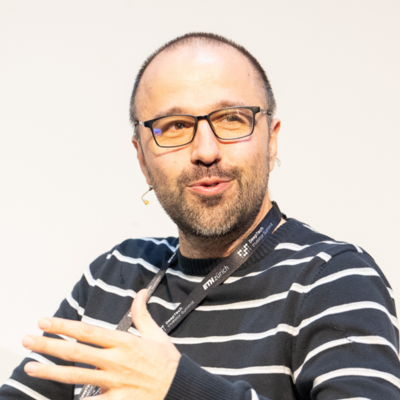 Boris Paskalev
 Raphaël Pinson · Isovalent
 Alexander Stigsen · Exasol
 Matt Elwell · Flagsmith

 Syrian Hadad, Alexander Büchel

 Yuliya Khadasevich, Liuba Gonta
 Aarno Aukia · VSHN
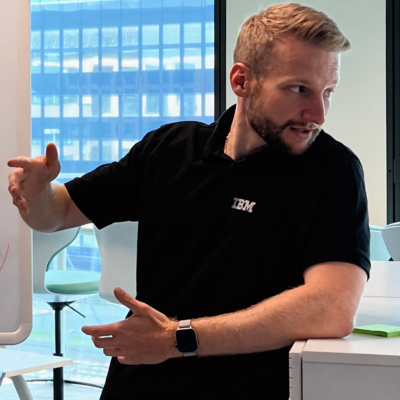 Domenic Largiadèr · IBM

 Sergiu Petean, Baris Yorganci
 Warren Parad · Authress


 Abbas Tutcuoglu, Arsenii Gavrilenko, Jules Giroul
 Abdel Sghiouar · Google Cloud
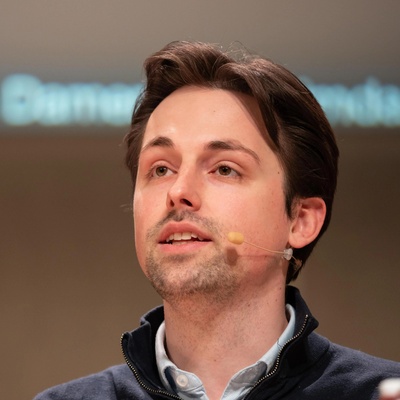 Tim Damen · ABN AMRO



 Maxim Salnikov, Jose Luis Latorre Millas, Serena Sensini, Markus Leutwyler, Lize Raes
Marco Kuendig, Davide Walder
David Pech · Wrike
Raphaël Pinson · Isovalent
Warren Parad · Authress
Manisha De · Swisscom
Michael Rishi Forrester · Accenture
Alexander Stigsen · Exasol
Abbas Tutcuoglu, Arsenii Gavrilenko, Jules Giroul
 Simon Martinelli · martinelli.ch
Stefano Maestri, Alessio Soldano
Sohan Maheshwar · AuthZed
Matt Elwell · Flagsmith
Ricardo Silveira Cabral, Matt Staats
Alessandra Pasini · AWS
Syrian Hadad, Alexander Büchel
Baptiste Macé · Arolla
Pini Reznik · re:cinq
Yuliya Khadasevich, Liuba Gonta
Abdel Sghiouar · Google Cloud
 Kevin Dubois, Dimitris Andreadis
Krzysztof Cieślak · GitHub Next
Natalie Pistunovich · JFrog
Aarno Aukia · VSHN
Susanna Wong · Typeform
Huriel Reichel, Oliver Hofmann
Domenic Largiadèr · IBM
Tim Damen · ABN AMRO
Max Gfeller · Lovable
Sven Scheffel, Gabriel Dinant
Sergiu Petean, Baris Yorganci
Maxim Salnikov, Jose Luis Latorre Millas, Serena Sensini, Markus Leutwyler, Lize Raes
 Vincent G · letsboot
Welcome Session
Doors open, coffee's poured — let's kick things off. Join Barbara and Jonas Felix, co-founders of letsboot, as they welcome you to Agentic Engineering Days Zurich 2026, set the stage for two days of hands-on agentic engineering, and share a few practical tips for getting the most out of the sessions, hallway conversations, and hands-on labs ahead.
Open talk page →Reachy mini: Giving a body to AI
Large language models can reason, generate code, and hold conversations. But they remain trapped behind screens. If AI is to become truly useful in our daily environments, it needs a body, a presence, and natural ways to interact with us. In this talk, I’ll present Reachy Mini, an open and developer-friendly robot designed to explore what embodied AI can look like today. I’ll walk through how we are building its core software stack, from multimodal perception to real-time voice interaction, and why voice is emerging as the most natural interface for physical AI. We will look at how speech-to-speech pipelines, local inference, and modular backends allow Reachy Mini to move beyond scripted demos and into responsive, real-world interaction. You will leave with a clearer understanding of what it takes to give AI a body, why voice-first interfaces matter, and how open tools can accelerate the next generation of interactive robotics.
Open talk page →Millions of exceptions a day: getting Bedrock and AgentCore right
BLP Digital's agentic platform resolves millions of exceptions a day across 550+ enterprise customers in 40+ countries. copebit builds and runs the AWS foundation underneath it. This talk walks both halves. First, the production system. Rather than retrieving over documents, BLP mirrors each customer's ERP — master data, business rules, process logic — into a Digital Twin, and lets 300+ pre-trained agents act against that typed model through 30+ standard integrations. The model is chosen per processing step on Amazon Bedrock: Anthropic's Claude Sonnet and Claude Opus models, and Gemma alongside them, with all inference in European AWS regions. Then the part that transfers to your own build. From the AWS foundations we build for Swiss enterprises and the agent platforms we run on Amazon Bedrock and Amazon Bedrock AgentCore, we go through the four decisions that determine whether an agent platform survives a security review: how user identity propagates through to the target system, how large a tool catalog you can afford in context and in cost, how endpoints stay stable, and how registering a new tool becomes a reviewed change. Plus the failure modes behind each.
Open talk page →"YOU MUST NOT ssh!" and Other Stories from Building Our SRE Agent
Everyone is building SRE agents. Most of them are barely junior sysadmins in a trench coat — useful for "how does X work?", useless when PostgreSQL replication is lagging at 3 AM across three datacenters at your specific company with your specific Puppet module. We started out obsessing over the tech stack, but after months in production, we learned a few hard truths: The agent framework? It doesn't really matter that much. The LLM model or vendor? Doesn't matter nearly as much as you think. Providing misleading docs? A massive problem. Fear of autonomy? Like handcuffing your agent and getting only 10% out of it. Not unit-testing the context? Likely you'll degrade in the future versions and lose people's trust. We'll walk through what surprised us, what the agent still gets wrong, and why security is the hardest third nobody talks about. No vendor pitch, just a story from the trenches so you can get "more realistic" about this.
Open talk page →The Agentic Lab Factory: How I Stopped Writing Labs and Started Reviewing Them
For years, getting new contributor SMEs to write labs was an uphill battle. The learning curve was too steep, the standards too specific, and the creation cost too high. What would it take to change that equation with AI? This is the story of how I built an agentic lab creation pipeline using Claude: starting by analyzing 40 existing labs to make tacit knowledge explicit, generating our own style guidelines, and feeding those back as the generative substrate. The result is a loop that implements, tests, scores pedagogy, and incorporates reviewer feedback autonomously, only stopping when every gate passes. The key insight: AI is a catalyst, not a creator. It amplified what was already good, our labs, our standards, our criteria. Without that foundation, the output would have been slop. With it, the bottleneck dissolved. New contributors who previously found the learning curve too steep can now prompt their copilot agent of choice and produce a lab that meets our standards, complete with pregenerated Credly badge templates. You'll leave with a framework for thinking about agentic workflows in terms of deterministic vs. non-deterministic gates, and a concrete example of what happens when the loop mostly runs itself.
Open talk page →Migration or migraine: What no one tells you about using LLMs
We had a task stuck forever in our backlog. A task so simple, yet so tedious that our team just kept postponing it. Even our bored intern didn't want to do it. The task: upgrade each framework used in our managed authentication solution to the latest version, without ruining our test coverage or breaking production. A task perfect for AI. Or so we thought... As it turns out, some coding tasks lend themselves to AI application better than others. Is a one-time migration involving ~100 components of a system actively used in production a good use case? How does the hype compare to the reality? In this talk, I'll share our experience using LLMs to perform a seemingly simple but surprisingly challenging migration. I'll discuss what went as expected, what surprised us, share the takeaways related to developer experience, efficiency, and quality, and go over what both skeptics and optimists get wrong about AI.
Open talk page →Beyond Prompts & Models: Evolving Architecture for Agentic Systems
As organizations experiment with enterprise agentic systems, discussions often center on models, frameworks, and tools. Far less attention is given to the recurring architectural decisions and engineering trade-offs that shape how these systems evolve over time. In our session we present a practical architectural evolution model that emerged retrospectively from recurring architectural decisions and trade-offs, observed while iteratively prototyping and evolving enterprise agentic systems. The model organizes these recurring patterns into a series of evolution stages that help engineering teams understand where their architecture is today and which engineering challenges typically emerge next. Drawing on enterprise AI initiatives at Swisscom spanning knowledge management, product management and AI-assisted operations, our session traces the architectural decisions that shaped each stage of this evolution: from establishing data readiness as the foundation for context engineering; through rapid low-code prototyping for workflow validation on n8n; to rebuilding multi-agent architectures on the Strands Agents SDK under enterprise deployment constraints; from an early investment in vector-based RAG to a leaner vectorless RAG approach that unblocked us; standardizing agent capabilities via MCP; and finally toward architectural simplification by re-realizing the same workflows with Kiro, GitHub Copilot and reusable agent skills - thereby trading custom orchestration for a smaller footprint. Based on real-world implementations, this session demonstrates how successful evolution of enterprise agentic systems is driven less by model capability and more by architectural choices around orchestration, context engineering, interoperability, and architectural simplicity.
Open talk page →Deploying Agents at Scale: What Enterprise Adoption Actually Looks Like
I spend my days inside enterprise AI rollouts — standing up the platforms, watching what agents do at scale, and cleaning up after them. This talk covers where the deployments and the research line up, and where they contradict each other. The evidence doesn't agree with itself. METR's 2025 randomized controlled trial found experienced developers 19% slower with AI while they believed they were 20% faster — and its 2026 follow-up couldn't measure the gap cleanly, because heavy AI users now refuse to work without it. Google's DORA study of nearly 5,000 practitioners says strong engineering foundations protect you. Faros AI's telemetry across 22,000 developers found the opposite: throughput up 66%, incidents per pull request up 243%, in mature organizations that should have been safe. I'll show you which read holds up. Then the enterprise layer — JPMorgan's 200,000-employee rollout, and the MIT-versus-Wharton disagreement over whether any of this returns money. The organizations pulling ahead didn't buy a better model. They redesigned the work around the tool, added guardrails, and measured against a real baseline before scaling. AI amplifies whatever system it lands in. Point it at a mess and it produces the mess faster. You will leave with a clear understanding of what levers increase enterprise AI success, and what levers cause it to fail.
Open talk page →Beyond MCP - Supercharging your agents with a single unified data plane
Agents need context that's spread across many systems, and regulated organisations can't copy it all into one AI platform. The talk covers federating queries to where data lives, adding semantic context so agents reason over business meaning, and sustaining sub-second performance at agent-scale concurrency, ending with an end-to-end demo on sovereign infrastructure.
Open talk page →Just Build — Orchestrating your Agents with Codex
- Codex installed
- OpenAI / ChatGPT login (a free account is enough)
A hands-on lab guided by OpenAI: see how you can orchestrate your agents with Codex. Follow along step by step on your own laptop, from first prompt to a working agent-driven workflow. Setup instructions and requirements will be shared before the event.
Open talk page →Hands-on Spec-Driven Development
- Git, able to clone GitHub repos
- Walk through the linked checklist below
In this lab, participants will learn how to develop software efficiently and systematically using Spec-driven Development (SDD) and the AI Unified Process (AIUP). Using a practical example project, participants will be guided step by step through the entire development process: from the initial vision and requirements specification to implementation. The lab demonstrates how to effectively use AI-powered tools to generate executable software from clearly defined specifications. We will use a simple Java stack to focus on the specifications. Participants will work with an AI agent, integrate skills and MCPs, and experience firsthand how these tools accelerate the development process. This lab is designed for developers who want to understand how structured specifications and AI tools work together to create high-quality software. Required infrastructure: - AI agent (Claude Code recommended, Copilot CLI, Codex, or others possible) - Java 25 - An editor or IDE
Open talk page →Agents Speak Protocol: Why Standards Are the Real Infrastructure of AI
Every major computing revolution eventually standardized how things talk to each other. Before TCP/IP, networks spoke dialects. Before HTTP, every service invented its own wire format. Before REST, SOAP was the only "enterprise" answer. Each time, entropy was reduced not by building better applications, but by agreeing on how they connect. We are at exactly that inflection point with AI agents. Today's agent ecosystem is a tower of Babel: agents speak different frameworks, tools are wired with one-off integrations, UIs are bolted on as afterthoughts, and client communication is reinvented per product. This is not a feature. It is entropy, and it is expensive. This talk maps the emerging protocol stack that is finally bringing order: MCP for agent-to-tool context, A2A for peer-to-peer agent collaboration, A2UI and AG-UI/MCPUI for declarative and generative interfaces, and ACP for client-side orchestration. We will examine what each protocol solves, where its boundaries are, and — critically — how they complement rather than compete. You will see concrete architectures where MCP and A2A work side by side in the same system, each doing what it does best. Along the way, we will draw parallels from protocol wars past: CORBA vs REST, SOAP vs JSON, WebSockets vs polling. History teaches that winners are rarely the most feature-rich; they are the simplest protocols that reduce the most uncertainty. The same pattern is already playing out in agentic AI.
Open talk page →Building Authorization for Agentic RAG Systems
We’ve recently seen the rise of Retrieval Augmented Generation (RAG) systems. With the proliferation of AI Agents & LLMs in Enterprise, the next step in the evolution is Agentic RAG. But for widespread adoption of Agentic RAG systems in enterprise there’s one piece of the puzzle that needs to be solved and that’s fine-grained authorization. This talk is a deep dive into how modern authorization systems can ensure that AI Agents have access only to authorized data. The talk will look at why the Google Zanzibar model of authorization which uses Relationship-Based Access Control (ReBAC) is well suited to handle dynamic, relationship-driven authorization at scale. The talk explains how the Google Zanzibar system works under the hood, and how to apply it to Agentic RAG with techniques such as pre-filteration and post-filteration. As a bonus also learn about how OpenAI achieves authorization at scale with ChatGPT Apps. The talk will also include a live coding demo implementing authorization for Agentic RAG using Open Source tools such as Weaviate, Langchain, and SpiceDB.
Open talk page →Tie a Metric to Every Release
AI writes more of our code every week, which means we ship a lot more than we used to. But we don't fly blind: every release goes out behind a flag, tied to a metric that tells us whether to continue the rollout or take a step back. I'll do it live: ship a feature to prod, roll it out to a slice of traffic, watch the metric move, and decide on the spot. No redeploy, no rollback pipeline. This is how we run Flagsmith on Flagsmith, and it's how our customers ship their code: behind a flag, against a metric. Faster releases, fewer surprises.
Open talk page →NOOA: Inside NVIDIA's Object-Oriented Agent Harness
An agent is only as good as the harness around the model. At NVIDIA, Matt's team built NOOA (NVIDIA Labs Object-Oriented Agents), an open-source research preview that treats the agent as a Python object: typed input/output, pass by reference on live objects, code as action, programmable loop engineering, explicit object state, and model-callable harness APIs. Matt walks through these six capabilities, shows how NOOA runs inside NVIDIA OpenShell, and what they buy you in numbers: 82.2% on SWE-bench Verified, 50.2% mean RHAE on ARC-AGI-3 and 86.8% on CyberGym L1 - the top-scoring open-source agent there, at roughly half the token cost of comparable harnesses.
Open talk page →Specs first, code later (or how I build software in the AI-DLC era)
As AI-driven software development became part of our lives, writing specs before touching anything code-related became the natural thing to do. A structured specification captures what the system should do, how it should behave at the edges, and what "done" looks like. Then AI takes it from there. The workflow behind this is AI-DLC, a three-phase lifecycle: Inception (AI proposes the architecture), Construction (AI generates and iterates on code from your spec), and Operations (AI monitors and patches). Developers steer at each gate, but AI does the building. In this session I'll walk through a real project built this way, show where a good spec caught bugs that tests missed, and demonstrate when rewriting your spec becomes faster than fixing the code. You'll leave with best practices for writing specs, practical rules to follow, and a workflow you can try on your next feature.
Open talk page →You Can't Ctrl-Z a Robot: Coding Agents in Embedded Systems
Coding agents work well in the terminal because feedback there costs nothing. Compiler errors, failing tests, stack traces, all of it arrives instantly and in writing, and the agent reads the message and tries again. As soon as code has to move something in the physical world, that stops working. Reality writes no error messages, and it has never had an undo. Embedded engineers dealt with this long before anyone talked about agents. They build simulators to fail in, they measure what actually happened instead of what was intended, and no change reaches the hardware without proof. We put a coding agent into that same loop and look at where it earns autonomy, where it has to be stopped, and why teams whose code never touches hardware run into the same problem with every irreversible action they automate.
Open talk page →A Practical Guide to Fast and Private LLMs
A set of practical tips and tools for hobbyists and teams to run their own LLM in a private and sustainable setup. This talk gives people hands-on knowledge to decide on the right LLM architecture, how to optimize it, which hardware to run it on, and what software stack to go for. A whirlwind tour of how to roll your own AI for fun and profit.
Open talk page →From a RAG Demo to a RAG System
Building a RAG demo is easy. Making it reliable is a different challenge. Real-world RAG systems face messy documents, stale and unauthorized sources, and answers that sound convincing but lack sufficient evidence. This lightning talk shows where RAG breaks beyond the demo, why vector search alone isn’t enough, and how a simple contract — Find → Verify → Observe — makes retrieval, evidence and failures visible. And as RAG becomes agentic, a new question emerges: when should an agent search again, and when does it have enough to answer?
Open talk page →Running Secure Agents at Scale
Building secure and scalable agents at scale is hard. From multi-tenancy and noisy-neighbor risk to tool access and data boundaries, teams need more than a prompt and a container image—they need a deliberate execution model. At Adobe, we are running agents on the CNCF Agent Sandbox project: a sandboxed runtime for AI agents that manages their full lifecycle—provision, execute, observe, and tear down—while keeping workloads isolated from the rest of the platform. Sandboxes enforce resource limits, reduce blast radius, and give operators a consistent place to apply policy. We have applied optimizations so that development teams can run agents without the need to understand the sandboxing mechanism or worry much about the increased complexity of single tenant agent execution. In this session we’ll share the problems we hit running agents for real customers, how Agent Sandbox addresses them, and what we’d do differently next time.
Open talk page →Securing MCP in the Enterprise: OAuth, Token Exchange, and Real-World CI/CD Integration
This talk shares a hands-on experience integrating the Model Context Protocol (MCP) into an enterprise CI/CD on-prem toolchain (SonarQube, Bitbucket, Jenkins, Backstage, OKD, YouTrack etc..) using a centralized identity provider (Keycloak). At ELCA we built a remote MCP server (Quarkus) acting as a common layer between tools and agents, focusing on authentication and delegation flows rather than just connectivity. To enable end-to-end trust, we also developed extensions/plugins for Jenkins, Bitbucket, and SonarQube to validate and consume JWT Bearer tokens issued through these flows without the need of static API keys. The session dives into practical usage of modern OAuth / OpenID Connect features in a multi-system environment: Client ID Metadata Documents (CIMD), token exchange (internal ↔ external), JWT bearer grants, and identity brokering. We’ll explain how agents securely access downstream services across trust boundaries. Expect concrete architecture, protocol flows and lessons learned when bringing MCP into an existing platform without rewriting everything.
Open talk page →AI & Agility: Is Spec-Driven Development Bringing Back Waterfall? And How to Move Beyond It
With the rise of LLMs, a new promise has emerged: software development driven by specifications. Multi-agent systems, RAG, MCP... everything seems to converge toward an appealing idea: given enough context, AI can build an entire system. In practice, however, this approach—often referred to as Spec-Driven Development (SDD)—quickly reveals its limitations. It assumes a perfectly understood context, known invariants, and an AI capable of filling every gap in the specification. The result is often the same: systems that look impressive in demos but fail in production, leaving behind a massive understanding debt. This talk shares concrete lessons learned from real-world projects where AI is used daily in complex product environments. We will explore: Why SDD is a modern reincarnation of the Waterfall model, fundamentally incompatible with the complexity of real-world systems. How human cognitive limitations (bounded rationality) also apply to the way we use LLMs. Why treating an LLM as an unreliable accelerator radically changes the way we build software. We will introduce a pragmatic alternative: Empirical Product Development (EPD), an approach built around: Atomic tasks A wall of feedback (tests, performance, system consistency, business validation) Iterative and controlled progress Through real examples, we will show how to: Integrate AI into an agile development cycle without losing control Avoid black-box effects Accelerate delivery without compromising quality This talk is aimed at practitioners already using AI in their day-to-day work who want to move beyond the hype and build systems that are truly robust in production.
Open talk page →From Copilot to the Dark Factory
AI coding tools make developers faster, but they do not automatically make organisations ship faster. PR volume rises, review queues grow, tests weaken, and context, security, and platform bottlenecks become visible. AI does not remove the constraint; it moves it. This talk combines the AI Adoption Ladder with the emerging architecture of software factories. It shows how teams progress from first licences to agentic delivery, and the six systems required to scale safely: orchestration, sandboxes, context, validation, governance, and learning loops. Attendees will learn how to identify their next bottleneck and build beyond “everyone gets Copilot.” Licences create activity. Software factories create durable advantage.
Open talk page →We Rolled Out GitHub Copilot… How Do We Prove It Helps?
AI-assisted development tools like GitHub Copilot are being adopted quickly. Many organizations have already rolled them out - or are seriously considering doing so. Adoption often looks promising: licenses are paid for, developers are using the tool, and usage metrics look encouraging. And then the inevitable question comes up: how do we prove this actually helps? This is not a new problem. Every major shift in how we build software - Agile, DevOps, CI/CD - has raised similar questions about productivity and effectiveness. AI-assisted development is simply the latest change in how work gets done, not a completely new measurement challenge. In this talk, we’ll explore different ways to reason about the impact of GenAI assistants across the Software Development Life Cycle (SDLC), drawing on existing measurement approaches such as DORA and the SPACE framework, and examining how Copilot’s tool-level metrics can add context. Rather than focusing on generated lines of code, we’ll show how Copilot metrics can be used to understand adoption and improve enablement - when interpreted correctly. This session is for software architects, engineering leaders and senior developers who want to actively improve the adoption of AI-assisted development and apply a structured framework to measure its impact across the SDLC.
Open talk page →ADK Crash Course - From Beginner To Expert
- Google / Gmail account
- Laptop with a browser
- Nothing to install: ready dev environment in Google Cloud Shell
You're about to step into the exciting world of AI agents. Forget simple chatbots that just answer questions. We’re diving deep into the Agent Development Kit (ADK) to build sophisticated, autonomous systems that can reason, plan, and use tools to accomplish complex tasks. Part 1: Hands-on with Agent Development Kit: Build custom AI agents using Python or Java and the Agent Development Kit (ADK). Learn ADK interfaces, project structure, and create a multi-agent example, progressing from a simple workflow to a complex system. Part 2: Connect to Remote Agents with ADK and A2A SDK: Deploy your ADK agent as a remote agent using the Agent2Agent (A2A) Python or Java SDK. Cover AgentCard preparation, A2A Server deployment, command-line querying, and enabling inter-agent communication. Learn how A2A protocol enables an interconnected AI ecosystem allowing agents to integrate and share capabilities.
Open talk page →Build Your Own Production-Ready Agentic Apps
- Git, able to clone GitHub repos
- Walk through the linked checklist below
Most agentic AI demos stop at "hello world." In this lab, attendees will build a real agentic application using Quarkus + LangChain4j (Java) and iteratively evolve it from a simple LLM client into a production-minded workflow. We start with a minimal baseline, then add tool/function calling, external capability integration with MCP, and most of all, multi-step agentic orchestration patterns. Along the way, we validate each step with observable behavior, discuss trade-offs, and compare agentic vs non-agentic alternatives to avoid over-engineering. By the end, every participant leaves with a running Java project and a practical blueprint they can reuse in their own team: when to use agents, when not to, how to structure tools and orchestrate agents, and how to keep reliability, safety, and cost in check.
Open talk page →The next frontier - agentic collaborative environments.
AI-agentic developer tools like Claude Code or GitHub Copilot CLI have emerged as a primary way to develop software over the last few months. However, agentic engineering has been a solo story so far - one developer with a dozen agents, moving forward at warp speed. But coding without thoughtful planning, understanding of the problems, and team alignment is just a waste of time and tokens. When everyone on a team is directing agents alone in their personal CLI tools with no shared context, you get duplicate work, conflicting changes, poorly-designed solutions, surprise features nobody else agreed to build, and everyone pulling in different directions. At the same time, serious software development is a collaborative problem-solving - you need multiple perspectives, types of expertise and various backgrounds to build great things together. We need agentic environments that enable this, where people can plan together and share the same context with AI agents driven by the team, rather than by individual developers. In this talk, I'll demo how we've addressed these design challenges in Ace, a multiplayer agent environment from GitHub Next that enables real-time collaboration, proactive agents, and sandboxed micro VMs for rapid prototyping and exploration, fostering a more engaging teamwork experience.
Open talk page →Watching Agents for Trouble
Once an agent can touch a database, send email, or deploy something, the interesting question shifts from "is the answer good" to "how much damage can it do, and would anyone notice." And the damage often isn't one forbidden step. It's a few allowed ones that add up. This talk is about the practices that catch it. The core one is boring on purpose: mark every moment an agent crosses a line, like reading something untrusted, handing off to another agent, or doing something with real permissions. Write those moments down as plain facts and carry them through every hop. Once they're facts, traces turn into something you can actually search. An attack like "read a poisoned input, then leak data" stops being a scary string to hunt for and becomes "this happened, then that happened." The reassuring takeaway: little of this is new. Most of it is engineering discipline we already have, a lot of it falls straight out of ordinary Go best practices, and it's no accident memory-safe languages are becoming the default choice for building agents.
Open talk page →Agents Need Platforms Too: Running LLM and Agent Workloads the Cloud-Native Way
Demos of AI agents are easy. Running them reliably is not. Once agents move from local experiments into production, familiar DevOps questions return: where do they run, how are they observed, how do they access tools and secrets, how do we control cost, and how do we recover when they fail? This talk shows how cloud-native infrastructure can support production-grade agentic systems. We will map the building blocks of an agent platform, from Kubernetes-based inference with open models to API gateways, tool access, observability, safety boundaries, and lifecycle operations. The goal is not to hype agents, but to show what it takes to operate them like real software.
Open talk page →When Software Stops Being Deterministic: Rethinking Engineering Practices for AI-Native Systems
For decades, we've built software around a simple assumption: the same input produces the same output. If behavior changes, we can usually trace it back to a code change. We write tests, review diffs, deploy to staging, and rely on CI because software is fundamentally deterministic. LLM systems break that assumption. As you build with language models, behavior increasingly emerges from the interaction between prompts, retrieval, context, model choice, and evaluation—not just the application code itself. Features can regress without a single line of business logic changing. A prompt tweak fixes one failure mode while introducing another. The engineering instincts that served us well for years don't disappear, but many of them stop being sufficient. This talk is about what that transition has actually looked like while building agentic systems at Typeform. Rather than presenting a polished architecture or a success story, I'll walk through real features we're building today - including the trade-offs, dead ends, and problems we still haven't solved. Each example highlights an engineering habit I had to rethink. I'll cover four practices that have become essential: continuous evaluation instead of relying on traditional test suites, trace-level observability instead of application logs alone, reviewing prompts and other AI artifacts as first-class engineering assets, and orchestrating systems whose components are inherently non-deterministic. The goal isn't to convince you that AI changes everything. It's to show which engineering principles still hold, which ones need to evolve, and the practical patterns we've found useful along the way. If you're already building LLM applications - or are about to start-this talk aims to save you from having to unlearn some of those lessons the hard way.
Open talk page →OCR at Swiss Post: The Case for Small Language Models
Everyone reaches for a frontier LLM by default — and then the bill, the latency, and the data-privacy questions arrive. But public routing research (RouteLLM, Microsoft's Hybrid LLM) shows that 40–60% of typical queries can be handled by a smaller model with no measurable drop in quality — and for specialized, bounded tasks, that number easily explodes toward the vast majority. At Swiss Post, we put this to the test. We built a centrally self-hosted platform around a Small Language Model, served with vLLM on Kubernetes with GPUs, using OCR as our real-world case. The result: lower cost, better latency, full data sovereignty — and far less operational complexity than the "you can't self-host in production" narrative suggests. This talk makes the case for SLMs as a serious production strategy, not a compromise. We share a candid comparison of cost, accuracy, and performance against LLM alternatives, how we kept sensitive citizen data fully in-house, and the architecture that makes self-hosting genuinely approachable. The core message: an LLM is not a Swiss Army knife. For a huge share of real workloads, a specialized, self-hosted SLM is cheaper, faster, more private — and easier to ship than you'd expect. We close with the question that reframed our thinking: how many of your requests actually need an LLM in the end?
Open talk page →Open Agentic AI Without Lock-In: The IBM Approach with watsonx Orchestrate
Agentic AI is transforming how organizations automate work, but many solutions come with platform dependencies and vendor lock-in. In this session, discover how IBM watsonx Orchestrate enables an open approach to Agentic AI, allowing organizations to connect agents, models, data sources, and business applications across their existing technology landscape. Learn how to build AI-powered workflows that span multiple systems, leverage the best models for each task, and orchestrate work across the enterprise without being tied to a single vendor ecosystem. Through practical demonstrations and real-world examples, you'll see how watsonx Orchestrate helps organizations move from AI assistants to autonomous, business-driven agents that deliver measurable outcomes.
Open talk page →Your Biggest New Customer Can't See Pixels
For decades we've argued that accessibility is the right thing to do. The argument just got a lot easier, because your next customer probably isn't human. Whether you like it or not AI agents from are now browsing, comparing, and interacting on behalf of users. And here's the twist: they consume your site through the exact same accessibility tree screen readers do. Semantic HTML, proper labels, ARIA states, keyboard support, the same patterns that serve disabled users determine whether an agent can efficiently complete a checkout, fill a form, or even find your product. In this talk we'll look at how agents actually use the web, where they fail (and why those failures map to WCAG violations), and what web development teams should do today. If you've been waiting for a business case for accessibility that lands with execs, this is it.
Open talk page →Build your own Coding Agent
Coding agents feel like magic: point one at a codebase, ask it to fix a bug, and it reads files, edits code, runs commands, and iterates until the task is done. But under the hood, the core ideas are surprisingly approachable. In this live-coding talk, we’ll build a small coding agent from scratch and use it to demystify how tools like Claude Code or Lovable work. We’ll look at the agent harness: the application layer that talks to the model, maintains context, exposes tools, interprets tool calls, etc.
Open talk page →Agentic AI at Migros Online: Autonomous Engineering Agents and Conversational Shopping
AI agents are arriving at both ends of e-commerce at once. Inside product engineering organizations, they are starting to take on real delivery work: migrations, routine fixes, and the long tail of changes that quietly consume engineering focus. On the product, customers are beginning to shop through AI assistants instead of browsers, and they will expect products and baskets to be reachable from a conversation. At Migros Online, the online supermarket of Switzerland's largest retail group, we are exploring both movements in parallel. On the engineering side, we are working toward autonomous agents that reliably handle background work, with the guardrails and context this requires. On the product, we are experimenting with conversational shopping by opening our catalogue to AI assistants through integrations such as MCP. In this talk, we share why we believe an e-commerce company needs to invest on both sides at once, how we approached each experiment during our internal Hackweeks, and a look at our learnings: what worked, what did not, and what we would do differently.
Open talk page →FSI Transformation at Scale: Sovereignty, Compliance & Production Realities
Every financial institution aspires to become 'AI-native.' They promise hyper-automated engineering, autonomous workflows, and unprecedented speed. But when faced with strict data sovereignty, evolving compliance, and complex production environments, how realistic is this goal? Is an AI-native FSI truly achievable, or just a regulatory pipe dream? In this candid fireside chat, Sergiu Petean (EMEA Field CTO at Atlassian) is joined by Baris Yorganci (Head of Division at BarmeniaGothaer, a leading German insurance group) to dissect the true pace and feasibility of AI-driven transformation. Moving beyond traditional retail banking, they explore actionable lessons from across the broader ecosystem—including high-velocity neo-banks, digital insurers, and innovative MGAs. Rather than treating regulation as an insurmountable barrier, Sergiu and his guest will map out how leading institutions turn data sovereignty, compliance requirements, and production constraints into structural guardrails for safe, scalable AI innovation.
Open talk page →Can We Trust Autonomous Agents? (Panel Discussion)
Panel discussion. How much autonomy can we hand to agents in production — and what has to be in place before we do? Guardrails, evaluation, observability and human oversight, discussed by practitioners from different corners of the field. Moderated by Maxim Salnikov. Further panelists to be announced.
Open talk page →Agent on the Wire: Looking Inside an AI Coding Agent
- Browser
- Git
- SSH
- Docker
- VS Code
What actually happens between giving an AI coding agent a task and receiving working software? In this hands-on lab, participants will route a coding agent through an interception layer and inspect the interactions normally hidden behind the terminal interface. They will follow the instructions, context, tool definitions, tool calls, and results exchanged while the agent work effectively observing its visible “brain activity” in real time. Participants will then use a coding agent to create a small project, capture the resulting traffic, and transform it into a visual HTML report. The preconfigured environment keeps the focus on experimentation rather than setup. Attendees leave with a practical mental model of how coding agents operate and a repeatable approach for analyzing and improving agent workflows.
Open talk page →Human-in-the-Loop Is You: A Guide to Working With Multiple Coding Agents
"Human-in-the-loop" is supposed to mean a person makes the judgment calls a model can't. In practice, when Claude Code, Codex, and Cursor are all open at once, it usually means something dumber: copy-pasting the same bug report into three different chat windows, re-explaining context each time, and losing track of which agent already tried which fix. Is a meta-harness the solution? This talk digs into what that would actually take: combining multiple coding agents into a single workflow rather than three separate ones, setting spend caps and approval policies rather than manually babysitting every action, and sharing a live session so a teammate can review or co-drive rather than screen-sharing a terminal. Expect a live demo, a few lessons learned, and a verdict on whether it works.
Open talk page →How do you know your coding agent actually helps?
Agents now write most PRs in many teams. Often another agent reviews them. Yet almost nothing merges without a human, because nobody can show where the agents are safe to trust. Writing code got automated. Trusting it didn't. Public benchmarks won't tell you. On real applications, agents resolve 38.6% fewer issues than on popular libraries (SWA-Bench, ICML 2025). Your git history is a better benchmark. Every revert, hotfix and follow-up fix points back to a PR, the agent that wrote it and the review that missed it. This talk shows how to measure coding and review agents on what actually shipped, with data from real teams. 1 in 5 PRs that a review agent graded "perfect" still introduced a bug. On 78% of PRs, human review changed nothing. We trace one escaped bug end to end, go through the four failure modes behind most review misses, and give you a recipe to run on one repo next week.
Open talk page →Aarno Aukia
Aarno is a co-founder and partner of VSHN - The DevOps Company in Zürich, Switzerland. He has been working on DevOps and Platform engineering using Kubernetes and open-source software for over ten years.
Open speaker page →Abbas Tutcuoglu
Abdel Sghiouar
Abdel Sghiouar is a senior Cloud Developer Advocate @Google Cloud. A co-host of the Kubernetes Podcast by Google and a CNCF Ambassador. His focused areas are GKE/Kubernetes, Service Mesh and Serverless. Abdel started his career in datacenters and infrastructure in Morocco where he is originally. Before moving to Google's largest EU datacenter in Belgium. Then in Sweden he joined Google Cloud Professional Services and spent 5 years working with Google Cloud customers on architecting and designing large scale distributed systems before turning to advocacy and community work.
Open speaker page →Alessandra Pasini
Alessandra Pasini is a Solutions Architect at AWS in Zurich, where she helps engineering teams design and build on the cloud — from data and machine learning platforms to cost-efficient architectures. She holds a master's degree in Computer Science and Engineering from Politecnico di Milano and has spoken at AWS Summit Zurich, Swiss Cloud Day and Data Days. In 2022 she was named an AWS Swiss Hero, and she is an active supporter of women in tech.
Open speaker page →Alessio Soldano
Open-source software engineer with over 15yrs of experience in the field and people manager of a worldwide distributed and diverse team of engineers. Contributor of RESTEasy and many other successful open-source projects (WildFly, Quarkus, Apache CXF, Apache WSS4J, Apache Santuario, ...) Currently exploring the real-world impact and practical applications of generative AI in software development — and beyond.
Open speaker page →
Alex Carol
Alex Carol is a Software Development Engineer with expertise in backend systems, DevOps, and high-traffic architectures, currently focused on AI-driven solutions and LLM-based systems. He brings extensive experience building reliable, high-performance infrastructure, having scaled systems from 8 million daily active users at SocialPoint to enterprise-level deployments for Fortune 500 companies. Over his career, he has contributed to major projects at Adobe, Smallpdf, Scopely, and SocialPoint, consistently delivering practical solutions in complex, large-scale environments.
Open speaker page →Alexander Büchel
Alexander Büchel is a Senior Embedded Software Engineer at adesso Switzerland with 9 years of experience developing software for industrial and real-time systems. His focus is on applying agentic software engineering to embedded development. Exploring how AI-powered agents can support and transform the way embedded systems are specified, architected, implemented, tested, and maintained.
Open speaker page →Alexander Stigsen
Alexander Stigsen is Chief Product and Technology Officer at Exasol. He co-founded Realm, the mobile database used in applications on over a billion devices and later acquired by MongoDB. With more than two decades of engineering and entrepreneurial experience, he now focuses on bringing together high-performance databases, data fusion, and agentic AI.
Open speaker page →Andrés Marafioti
Andrés Marafioti leads the Multimodal Research Team at Hugging Face, where he develops efficient, open, and accessible AI systems. He holds a PhD in applied machine learning, with a focus on generative models for speech and music. At Hugging Face, Andrés drives cutting-edge research in multimodal and memory-efficient models. He led the development of SmolVLM, the world’s smallest family of vision-language models, and co-created SmolDocling, a powerful document-understanding model in collaboration with IBM. His recent work expands into robotics, building open-source models that enable robots to follow natural language instructions. He's also a main contributor to several impactful open-source libraries, including NanoVLM and Speech-to-Speech, reflecting his commitment to reproducible, community-driven AI development.
Open speaker page →Arsenii Gavrilenko
Baptiste Macé
Ingénieur logiciel animé par l’ambition d’apporter un regard neuf à chaque mission, mon expertise réside dans l’identification des "pain points" et la mise en œuvre de solutions pérennes et adaptées. Axé sur le client, je crois fermement que le logiciel doit être un outil au service des utilisateurs, tout en respectant les enjeux sociaux et environnementaux. Écologiste convaincu, je m’efforce de réduire l’impact environnemental des projets numériques que je conduis, intégrant les pratiques de green IT comme un levier stratégique et éthique. J’aspire à développer des solutions responsables, en valorisant l’efficience et la durabilité à toutes les étapes du cycle de vie logiciel. En parallèle, mon engagement humaniste se traduit par une demi-journée hebdomadaire dédiée à des actions sociales. Je suis persuadé que la technologie, couplée à une approche bienveillante, peut être un puissant vecteur de progrès et de solidarité.
Open speaker page →Barbara Felix
Barbara Felix is the CEO and co-founder of Letsboot. She began her journey into the IT world as a project manager for web development in 2010, took an extended detour into Coop management with a focus on marketing, but always remained committed to technology. She leads a steadily growing team of 50 experts and develops the range of topics in close collaboration with clients. In addition, as Event Lead, Barbara oversees the organization of the https://www.agenticdays.com/">Agentic Engineering Day. SwissDevJobs Interview with Barbara: https://swissdevjobs.ch/blog/do-software-engineers-like-taking-courses IT Magazin article from Barbara about “Tech boot camps as a solution to the skills shortage”: https://www.itmagazine.ch/artikel/82110/Tech-Bootcamps_als_Loesung_fuer_den_Fachkraeftemangel.html
Open speaker page →Baris Yorganci
Baris Yorganci is Head of Division (Bereichsleiter) at BarmeniaGothaer, one of Germany's leading insurance groups. Before the merger he led an IT department at Barmenia Versicherungen. His focus is IT strategy, IT service management and the digital workplace, with a clear conviction: whoever uses technology only to cut costs misses its potential. In this fireside chat he joins Sergiu Petean (Atlassian) as the insurance industry voice on how AI transformation works under real compliance and production constraints.
Open speaker page →Boris Paskalev
Boris is CEO and founder of LogicStar.ai and a serial entrepreneur. He started his career at VistaPrint (now Cimpress) and saw it grow from 30 people to a unicorn and an IPO. He then co-founded DeepCode, an AI code review company acquired by Snyk, the $8B cybersecurity unicorn. He holds an EMBA from the TRIUM program and an MSc in Computer Science from MIT.
Open speaker page →David Pech
Accomplished DevOps professional with 20 years of experience in software development and infrastructure management. Proficient in a wide array of technologies within the Kubernetes and CNCF ecosystem, with a focus on producing high-quality, sustainable software solutions. Known for a pragmatic and security-conscious approach to technology adoption. Highly effective in leading hands-on teams to deliver direct value to customers. Passionate about educating and enabling teams in the adoption and understanding of cloud technologies.
Open speaker page →Davide Walder
Dimitris Andreadis
Dimitris has 25 years of experience in IT and he is currently Sr. Director of Engineering (Red Hat) at IBM in charge of the Cloud Native Runtimes group that includes the Quarkus, Vert.x, SpringBoot, and Node.js teams. He also served as the JBoss AS project lead and he has been a JBoss addict and contributor from the early start-up days. He worked previously at Intracom and Motorola in the areas of NMS/OSS, designing reusable frameworks and distributed systems. Dimitris studied computer science at the Technological Educational Institute of Athens and received an M.Sc. by research from University College Dublin, Ireland. Dimitris is also a passionate advocate of Open source technologies and has presented at a variety of events and conferences around the world. He has been an invited speaker at various Java/Linux community events and user groups, and he has delivered inspirational talks on technology and Open Source in universities and educational institutes. In his spare time he has also helped with the organization of technology enablement events for children, like Scratch Days, Devoxx4Kids and JCrete4Kids. https://dandreadis.blogspot.com/search/label/conference
Open speaker page →Domenic Largiadèr
Domenic Largiadèr is a technical expert for Data & AI at IBM Switzerland. He specializes in AI, Agentic AI, and Intelligent Automation, helping partners and clients conceptualize innovative technologies and build enterprise-grade solutions. Passionate about technology and knowledge sharing, Domenic regularly delivers workshops, lectures, and technical enablement programs across the DACH region.
Open speaker page →Gabriel Dinant
Java Enthusiast • Staff Software Engineer • 10+ years in Grocery Retail • Community Builder
Open speaker page →Huriel Reichel
Huriel Reichel is an ML Platform Engineer at Swiss Post, where he leads the company-wide MLOps capability and is building its first GPU-accelerated, self-hosted AI inference platform on Kubernetes (EKS + vLLM). With 6+ years turning experimental ML into production systems, his work has saved hundreds of thousands of CHF annually and brought 15+ models into production. A Swiss-Brazilian engineer with an MSc in Spatial Data Science, his current focus is making self-hosted small language models a practical, cost-effective, and sovereign alternative to frontier LLMs in production.
Open speaker page →Jonas Felix
Jonas started his journey into the world of Open Source in 1998 with a simple Linux CD as a portal to wonder and creativity. Since then he has been active in coding and OS community: namely Powercoders (empowering refugees), Basler Linux User Group, CCC Basel, elected TYPO3 Expert Advisory Board member, Angular Meetup Organizer etc. Besides coding he built several ventures as entrepreneur but as his heart is with technology, he focusses on his passion of teaching and inspiring for Open Source.
Open speaker page →Jose Luis Latorre Millas
José Luis Latorre is a Microsoft AI MVP, LinkedIn Learning Trainer, and Agentic & Software Architect at Swiss Life, where he leads the Developer Community, helps shape the AI strategy—while also building agentic applications that have to work on Mondays, not just in demos. Since 2023, he’s been contributing to Microsoft’s agentic AI frameworks (as in: building it, not just using it): Semantic Kernel, AutoGen, and now Microsoft Agent Framework (MAF)—where he’s Contributor #29. Nights and weekends, alongside the day job. Because apparently he enjoys pain… and shipping PRs. He has released 4 courses and is working on the next one (Agent Framework), teaching up to 60,000 learners. Frustrated by unreliable agents in the real world, he built AgentEval—the .NET evaluation toolkit that brings validation discipline to agents and agentic workflows (think: what RAGAS / DeepEval are for Python, AgentEval is for .NET). On stage, expect real engineering lessons, practical patterns, and live demos—helping teams build agents that are not just impressive, but measurably better. Tagline: “I don’t just build agents. I help build the frameworks… and then I measure whether they behave.”
Open speaker page →Jules Giroul
Kevin Dubois
Kevin Dubois is often featured as a (keynote) speaker at conferences around the world, where he shares his passion and knowledge about developer experience, agentic AI, open source, cloud native development and Java. He is also an author, java Champion, and an accomplished software architect and platform engineer. Kevin currently works as a Senior Principal Developer Advocate at IBM, and is also Technical Lead for the CNCF Developer Experience Technical Advisory Group.
Open speaker page →Krzysztof Cieślak
Krzysztof is a photographer, globetrotter, and public speaker. He works as a Staff Research Engineer at [GitHub Next](https://next.github.com/), where he designs and builds the next generation of developer tools such as GitHub Copilot, NES, Agentic Workflows or Ace After the work, Krzysztof is an open-source software maintainer passionate about functional programming (especially F#), editor tooling and developer experience - he has created and maintained several OSS projects varying from [language servers](https://github.com/fsharp/FsAutoComplete) to [web frameworks](https://github.com/SaturnFramework/Saturn) to [VSCode plugins](https://github.com/ionide/ionide-vscode-fsharp). Additionally, he is a passionate public speaker. You can meet him at many conferences around the world, where he is always trying to meet new people and learn how to improve software developers' lives.
Open speaker page →
Lena Fuhrimann
I love cloud-native and serverless software engineering! I work as an engineer with Kubernetes, AWS, and Azure. As such, I do a lot of development using languages like Go, TypeScript or Python. Modern software engineering needs to be cloud-native or even serverless. I've worked with more than 100 customers to migrate their products and applications to the cloud.
Open speaker page →Liuba Gonta
I am Liuba, IT Consultant and GitHub trainer. Turning complex coding challenges into simple, logical and efficient solutions is my passion. In a team I am all about sparking innovation and embracing new learning curves. When I'm not coding, you'll find me running, cycling, exploring new culinary delights or lost in a good book.
Open speaker page →Lize Raes
Lize Raes loves helping developers to bring AI into real-world applications. As Developer Advocate for Java + AI at Oracle and collaborator at LangChain4j, she’s invested into making cutting-edge tech accessible and useful for developers. Her path has taken her from cochlear implant research to advising the Belgian government during COVID-19, to bioinformatics for drug development. Lize likes her projects hands-on and slightly unconventional, especially when they help make the world a bit better. Outside of work, you’ll find her behind the piano or in her woodworking atelier.
Open speaker page →Manisha De
Manisha De is a Product Owner at Swisscom, specializing in agile practices, automation, CI/CD, and Generative AI. With a proven track record in driving innovation and managing enterprise-wide initiatives, she excels in balancing operational challenges and fostering cross-functional collaboration. Her expertise in transforming processes and leveraging AI tools positions her as a leader in advancing DevOps and SRE practices.
Open speaker page →Marco Kuendig
Marco Kuendig is CTO of copebit AG, an AWS Advanced Tier Services Partner in Switzerland, where he leads the cloud engineering practice. He works with Swiss enterprises on AWS architecture, agentic AI platforms and cloud governance — including the landing zone, Amazon EKS platform and Amazon Bedrock inference layer underneath BLP Digital's agentic platform.
Open speaker page →Markus Leutwyler
Markus is a maker, he builds things, not just software. He's shipped code for decades but would never call himself a software engineer; he cares about what it does, not the code itself. His air-quality sensor is the whole stack in one object: hardware, firmware, backend, integration. Not a full-stack developer but a full-metal one.
Open speaker page →Matt Elwell
Matt Elwell is co-founder and CTO of Flagsmith, an open-source feature flagging and release management platform used by engineering teams ranging from early-stage startups to global banks and Fortune 500 enterprises. Since founding the company in 2018 he has led its engineering organisation, its open-source project, and the private cloud deployments that run inside some of the world's most heavily regulated environments. That combination gives him a fairly unsentimental view of how software actually ships: the flags nobody ever cleans up, the rollout that goes wrong at 2am, and the gap between a release process that looks good on a slide and one that survives an audit.
Open speaker page →Matt Staats
Matt Staats is a principal engineer at NVIDIA, where he works on agentic AI evaluation, agentic harnesses and leads the development of agentic evaluation creation tooling. He earned his PhD from the University of Minnesota. Before NVIDIA, Matt worked on generative AI programs at Meta and Gemini and on self-driving cars at Apple.
Open speaker page →Max Gfeller
Max Gfeller is a technical evangelist at Lovable and was previously the tech lead for AI at Sutro, where the team built AI infrastructure that generates production-grade backends from text prompts. He created OpenHarness, an open-source agent harness (600+ GitHub stars), and co-founded Storique.ai, an AI-powered personalized storybook platform that trains custom diffusion models on your photos. He has spoken at LambdaConf, Front Conference Zurich, Developer Week, AI Tech World, and many other developer conferences.
Open speaker page →Maxim Salnikov
Maxim Salnikov is a tech community enthusiast based in Oslo. With more than two decades of experience as a developer, he shares his expertise in the web platform, cloud computing, and AI by speaking at and delivering training for developer audiences worldwide. By day, Maxim supports developer teams across Europe as a Senior Solution Engineer at Microsoft, focusing on AI-native developer tools and platforms. He is also an active builder of developer tooling, creating and maintaining AI agent assets that help engineers adopt AI-assisted development more effectively. In the evenings, Maxim runs events for some of Norway’s largest web, AI, and cloud developer communities. He is passionate about exploring the possibilities of Generative AI, with a strong focus on developer productivity. To share insights and connect with practitioners globally, he founded and organized the Prompt Engineering Conference, the key global event dedicated entirely to prompting from the engineering discipline perspective.
Open speaker page →Michael Rishi Forrester
Michael is the AI Workforce Transformation Lead at Accenture LearnVantage, where he trains FDEs at all levels and advises enterprises on agentic AI adoption at scale. Decades across DevOps, cloud, and AI, from CTO to IC, at AWS, Red Hat, ThoughtWorks, and more. He wrote Agentic DevOps with Claude Code, created the Agentic Covenants, and is an Exam Developer for the Linux Foundation MCP exam. He regularly demos AI and MCP on real Kubernetes clusters. Find his work at michaelrishiforrester.com.
Open speaker page →Natalie Pistunovich
As a professional question asker and passionate learner, Natalie found that the intersection of AI, code, and security sparks joy. She is a Developer Advocate at JFrog, a Google Developer Expert for Go and AI consultant, and a former OpenAI Developer Ambassador. In addition to teaching Cloud & DevOps at the university HTW Berlin, she is a public speaker and conference and community organizer in Berlin. Throughout her career, she has worked on four different continents as an engineering manager, software and hardware engineer, developer advocate, and co-founder of a mobile start-up.
Open speaker page →Oleksandra Bovkun
Oleksandra is a Developer Advocate at Databricks with a background as a Data Engineer, AI Engineer, and Solutions Architect. She's spent her career building real-world AI solutions and architecting data platforms — which means she's made most of the mistakes so you don't have to. She's passionate about making complex AI and data topics accessible and helping the community ship things that actually work in production.
Open speaker page →Oliver Hofmann
I am a Data Scientist and Machine Learning professional with 7 years of experience turning data into actionable insights and intelligent solutions. What excites me most is finding value in data, whether that means uncovering hidden patterns, solving complex business challenges, or building machine learning models that make a real-world impact. For the past 2 years, I have worked as a Data Scientist at Swiss Post, where I develop and deploy machine learning models for parcel and letter processing operations. My work focuses on improving operational efficiency, automating decision-making, and applying AI to optimize large-scale logistics processes. My background combines software development, data science, and machine learning, allowing me to bridge the gap between business needs and technical implementation. I am particularly interested in predictive modeling, applied AI, and using data-driven approaches to improve processes and customer experiences.
Open speaker page →Pini Reznik
Pini Reznik is a seasoned technology leader with extensive experience in the software industry. He is the CEO and Co-Founder of re:cinq, experts in Cloud Native and AI platform engineering. Former software engineer, Co-Founder of a Cloud Native consultancy and O’Reilly author.
Open speaker page →Raphaël Pinson
Raphaël is a Senior Technical Marketing Engineer with Cloud Native networking and security specialists Isovalent, creators of the Cilium eBPF-based networking project. He works on Cilium, Hubble & Tetragon and the future of Cloud-Native networking & security using eBPF. An early adept of the DevOps principle, he has been a practitioner of Configuration Management and Agile principles in Operations for many years, with a special involvement in the Puppet and Terraform communities over the years.
Open speaker page →Ricardo Silveira Cabral
Ricardo Silveira Cabral is a distinguished research scientist at NVIDIA, where he works on agentic AI, evaluation, and the Nemotron model family, and leads work on the Nemotron harness programs. He earned his PhD from Carnegie Mellon University and has published across natural language processing, computer vision, and machine learning. Before NVIDIA, Ricardo worked at Meta and Apple.
Open speaker page →
Richa Dinesh Tamhane
Richa Tamhane is a Data & AI Scientist at amnis, a Swiss B2B payments fintech, where she builds production AI features and data solutions. She holds a Swiss Joint MSc in Computer Science (Data Science) from the University of Bern, and previously worked in data engineering at Accenture. Outside work, she's an avid reader and book blogger.
Open speaker page →Serena Sensini
I started programming in VB when I was 6 taking advantage of my father’s strong passion for computer science. I’ve always dreamt to be an engineer and I’ve worn different “hats”: data scientist, data analyst, web developer, sysadmin… This gave me the opportunity to gain experience in the design and dev of solutions from scratch. During the day I’m an Enterprise Architect, while I love writing at night when I get a hot cup of tea!
Open speaker page →Sergiu Petean
Sergiu Petean brings over 15 years of experience in leading large‑scale cloud and engineering transformations across financial services, insurance, and high‑growth tech, including senior leadership roles at Allianz Direct. Sergiu is recognized for his expertise in cloud‑native architectures, DevSecOps, and large‑scale organizational change, and regularly engages with enterprise executives on topics such as agility, resilience, and AI‑powered collaboration. He is partnering with C‑level and senior technology leaders to modernize ways of working and turn their Atlassian stack into a driver of business outcomes.
Open speaker page →Simon Martinelli
Simon Martinelli is a Java Champion, Vaadin Champion, and Oracle ACE Pro with over three decades of experience as a software architect, developer, consultant, and trainer. He is the creator of the AI Unified Process (AIUP) and a strong advocate of Spec-Driven Development. As the owner of Martinelli LLC, he coaches teams to get up to speed with AI-driven development. He regularly shares his insights through international conferences, articles, and his blog, Keep IT Simple (https://martinelli.ch), where he writes about AI, architecture, and modern Java development. He is also a lecturer at two universities in Switzerland, where he teaches software architecture, persistence, DevOps, and cloud-native development.
Open speaker page →Sohan Maheshwar
Sohan is a Lead Developer Advocate at AuthZed, based in the Netherlands. He started his career as a developer building mobile apps and has been living in the cloud since 2013, in companies such as Amazon, Fermyon and Gupshup. He is also an O' Reilly author, having created a course on Cloud Concepts for Everyone. He has always been interested in emerging technologies and how it shapes the world around us. His interests outside work include visual arts, trivia, and playing frisbee.
Open speaker page →Stefano Maestri
With over 25 years of experience in enterprise software development and AI engineering, I explore how artificial intelligence is transforming the way we build, learn, and live with technology. I have an old passion for Open Source and more recent one for AI Engineering. I'm member of A2A technical steering committee at Linux foundation Podcaster and content creator in AI space
Open speaker page →Susanna Wong
Susanna is a Staff Software Engineer passionate about all web technologies, and engineering excellence in the adoption of AI. She has been a software developer with experience spanning across multiple industries, from small agile teams in big corporates ( CNN, Toyota Connected, FairFX, McKinsey/QB) to early stage startups, with extensive experience in web development (React, Ember, Angular, PWAs), GraphQL, and all things GenAI. Susanna is currently a Staff engineer at Typeform, working at the realms of building products in cutting edge AI. She is a Google Developer Expert in web technologies, and has spoken at multiple conferences worldwide, including Code Mesh 2017, Full Stack Fest 2018,Full Stack Europe 2019 and React Miami 2022. She currently sits on the Google Developer Advisory Board
Open speaker page →Sven Scheffel
AI Engineering | Architecture | Technical Leader
Open speaker page →Syrian Hadad
Syrian Hadad is CTO of adesso Switzerland and a passionate advocate for turning emerging technologies into real-world impact. Previously, he served as CTO of Informatik Aargau, where he led major web, platform engineering and AI initiatives for the public sector. Today, he focuses on agentic engineering, digital sovereignty and building AI systems that work beyond the demo.
Open speaker page →Tim Damen
Driven by the mission to make people's lives easier, Tim Damen actively advocates for and builds a web that serves everyone equally. Tim is a frontend developer, web accessibility specialist, and engineering manager from Amsterdam, the Netherlands 🇳🇱. With over a decade of experience, primarily at major financial institutions, Tim has spoken at various conferences and meetups. He also hosts "focustrap," a podcast about digital accessibility.
Open speaker page →
Valentin Delaye
As a DevOps Expert with over 15 years of experience, I focus on empowering development teams through CI/CD and infrastructure automation. My expertise includes Kubernetes, Jenkins pipelines, and Infrastructure as Code (IaC) using tools such as OpenTofu, Ansible, Docker and GitOps practices (Flux CD) Beyond my core role, I actively contribute to open-source projects, including maintaining the ORAS Java SDK as part of the CNCF and over 45 Jenkins plugins. Passionate about mentoring, I've participated in the Google Summer of Code to guide emerging developers. These experiences reflect my commitment to fostering innovation and collaboration in the DevOps and open-source ecosystems.
Open speaker page →Vincent G
Vincent is a Senior Innovation Engineer at Redguard AG, a Swiss cybersecurity consultancy, with a background spanning software engineering, security testing, and IT security consulting. He holds a Bachelor of Science in Computer Science and the OSCP, CRTO, and CISSP certifications. His work centers on secure, scalable software development and, more recently, on integrating AI into engineering workflows: building internal tools, testing where these systems break, and helping teams use them effectively rather than blindly. As a trainer with Letsboot, Vincent runs hands-on workshops on agentic software engineering, covering tools like Claude Code, GitHub Copilot, and Gemini CLI.
Open speaker page →Warren Parad
Warren is the CTO of Authress and an AWS Community Builder who believes that "in theory, practice and theory are the same, but in practice, they differ." As a Cloud Security Architect and international speaker, he's built a reputation as a "Tech Entertainer"—delivering hard engineering truths with a side of wit. He focuses on the physics of software reliability, arguing that unmaintained code is a liability. When he designing securing strategies, he is likely on stage dismantling the latest industry hype.
Open speaker page →Yuliya Khadasevich
Yuliya currently is en Engineering Manager and Microsoft MVP. With over a decade-long journey in IT across various international environments, she has played multiple roles from software developer to team lead, scrum master and trainer, each enriching her professional outlook. Yuliya is passionate about crafting clean, well-architected solutions and streamlining processes for efficiency. She strongly advocates for diverse, collaborative and harmonious work environments and finds fulfillment in supporting others in their professional growth.
Open speaker page →★ Spotlight Talks are provided by our sponsors and partners. Hands-On Sessions: bring your laptop, seats are limited by the room.